Stefanie Mueller
Associate ProfessorMIT Electrical Engineering and Computer Science, joint with Mechanical Engineering MIT Computer Science and Artificial Intelligence Laboratory Head of the HCI Engineering Group Email: stefanie.mueller@mit.edu [Curriculum Vitae]
Research: Fabricating Interactions
As a Human-Computer Interaction (HCI) researcher in the area of manufacturing and design, I develop novel fabrication techniques that combine innovations in hardware, materials, and computational algorithms to create interactions with objects that have not been possible before. Every day we interact with hundreds of objects. What our objects can be used for and how we use them, has a large impact on how we live our everyday lives. Many of the properties of our objects and thus the resulting interactions we have with them are determined by the materials they are made of and the manufacturing techniques used to make them. My work develops novel fabrication techniques that leverage innovations in hardware, materials, and computational algorithms to give objects capabilities that go beyond the type of interactions that exist today.Recently Accepted Papers

Bifur-circuits: Interactive and Modular Metamaterial Building Blocks Via Bifurcated Geometries.
In Proceedings of UIST '26.
InstructMesh: Selective Refinement of Generative 3D Models for Fabrication.
In Proceedings of UIST '26.
MorphoChrome: Real-Time, Handheld Fabrication of Programmable Structural Color.
In Proceedings of UIST '26.
ShiftLens: Mechanically Actuated Optical Surfaces for Switchable Appearances on 3D Objects.
In Proceedings of UIST '26.
X-Hinges: 3D-Printed Self-Sensing Compliant Mechanisms for Continuous and Multi-DOF Motion Sensing.
In Proceedings of UIST '26.
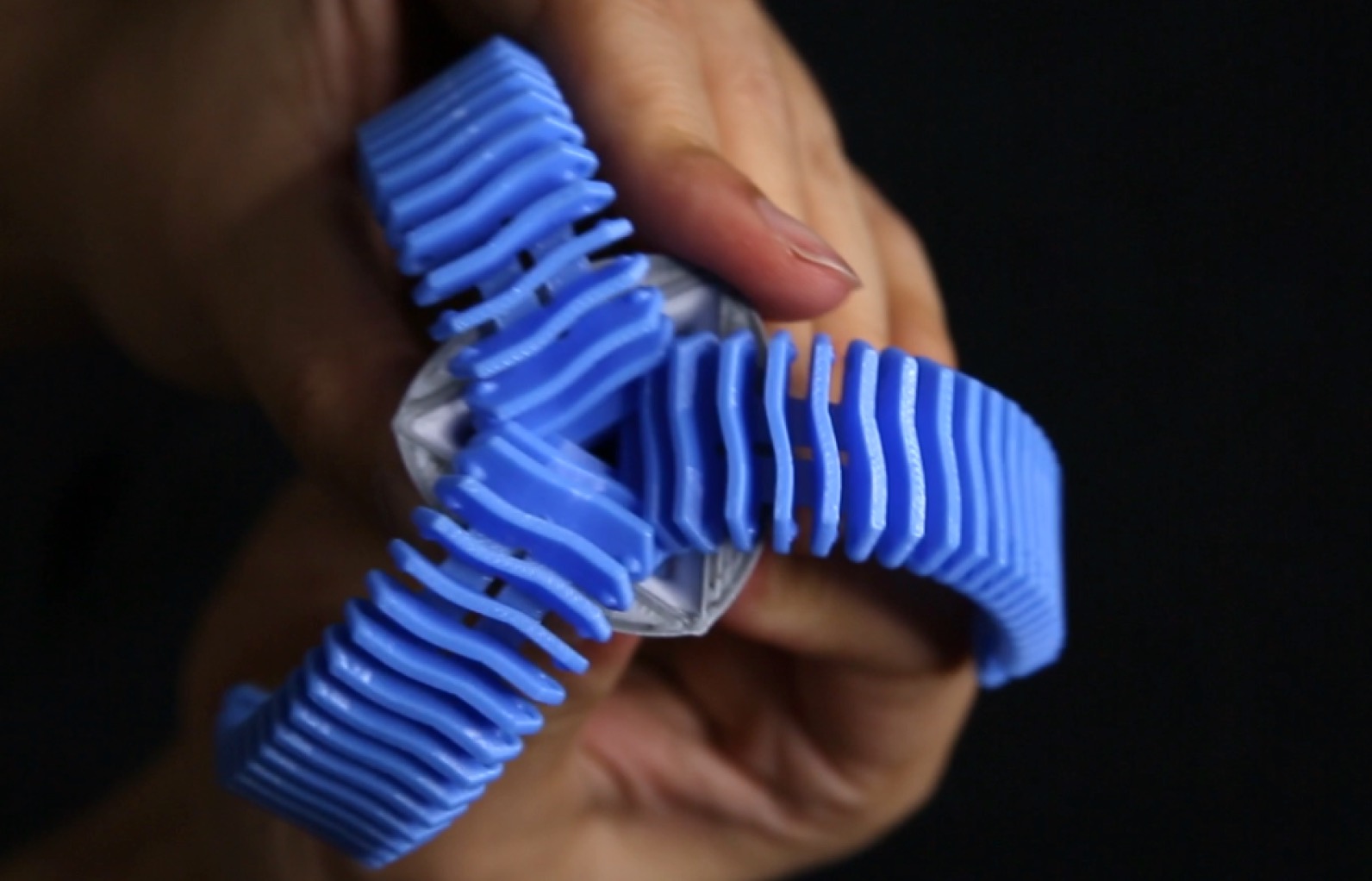
Y-zipper: 3D Printing Flexible-Rigid Transition Mechanisms for Rapid and Reversible Assembly
In Proceedings of CHI '26.
DOI PDF Video Slides Project Page
DOI PDF Video Slides Project Page
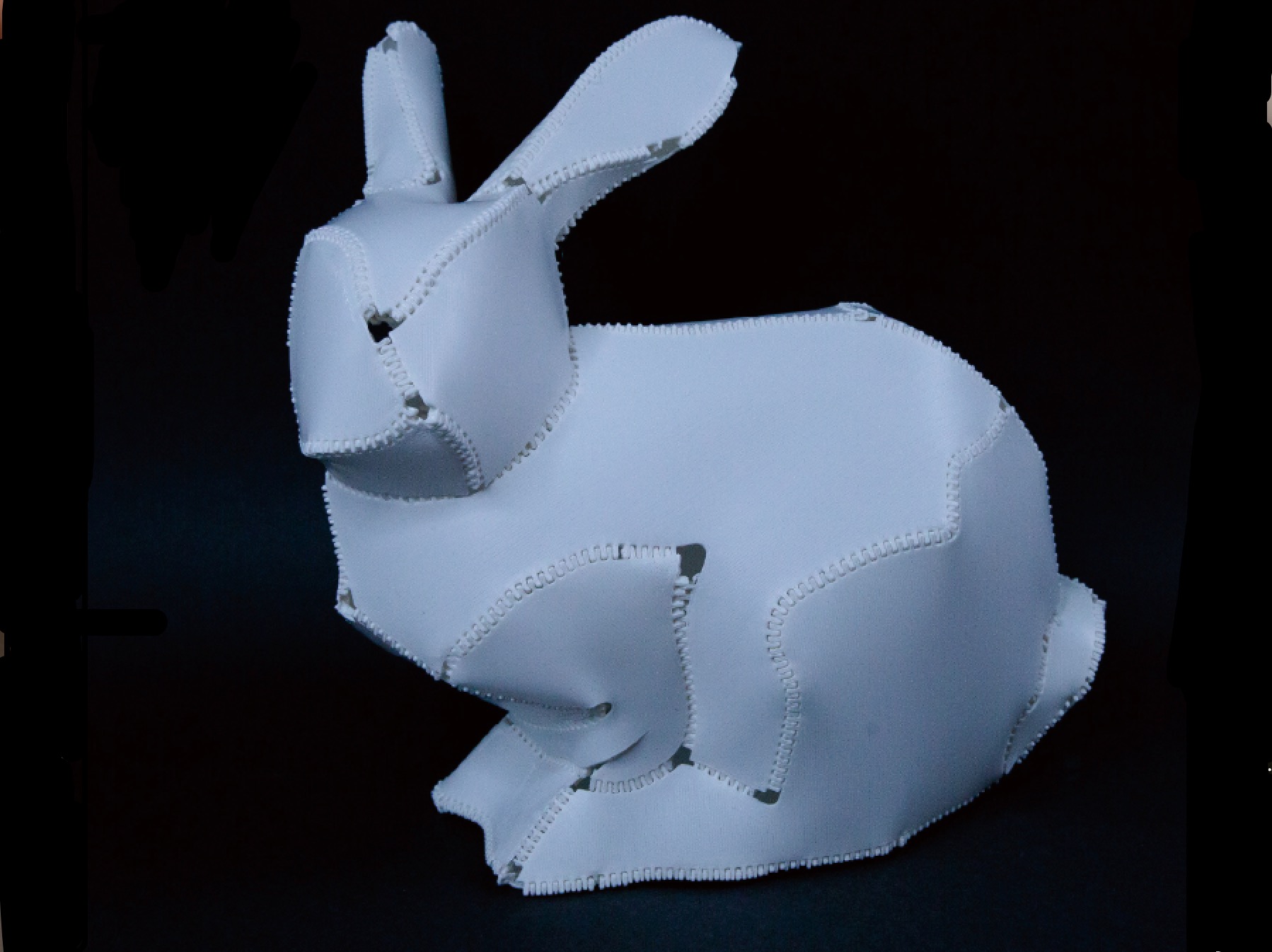
Zip-up Print: Rapid and Assemblable 3D Printing Using 2D Flattened Zipper-like Structures
In Proceedings of CHI '26.
DOI PDF Video Slides Project Page
DOI PDF Video Slides Project Page
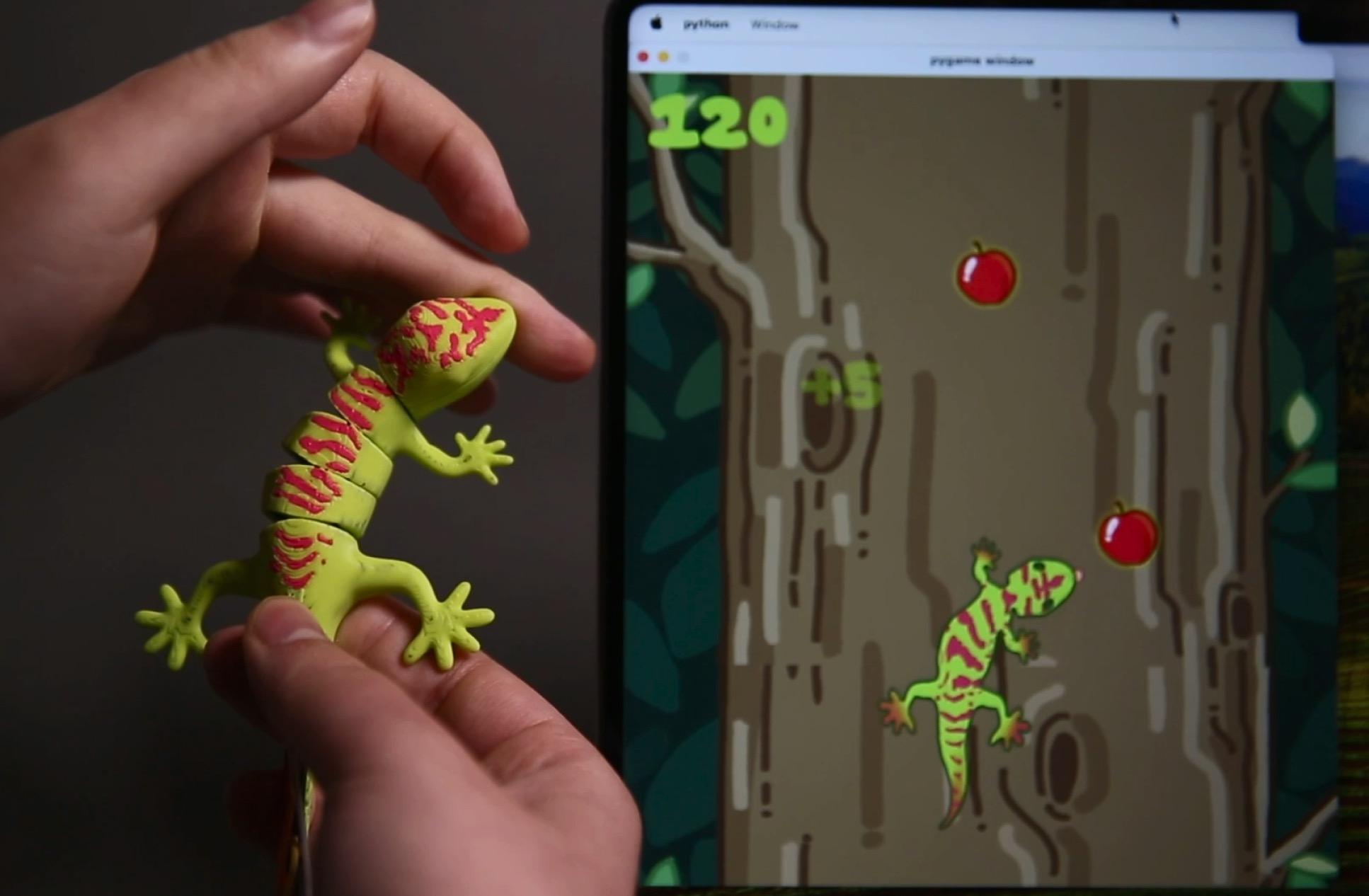
Xspine: Integrating Motion Sensing Capability into Dynamic Structures Using Multi-material FDM 3D Printing
In Proceedings of CHI '26. [* equal contribution] [Interactive Demos Jury Honorable Mention]
DOI PDF Video Slides Project Page
DOI PDF Video Slides Project Page
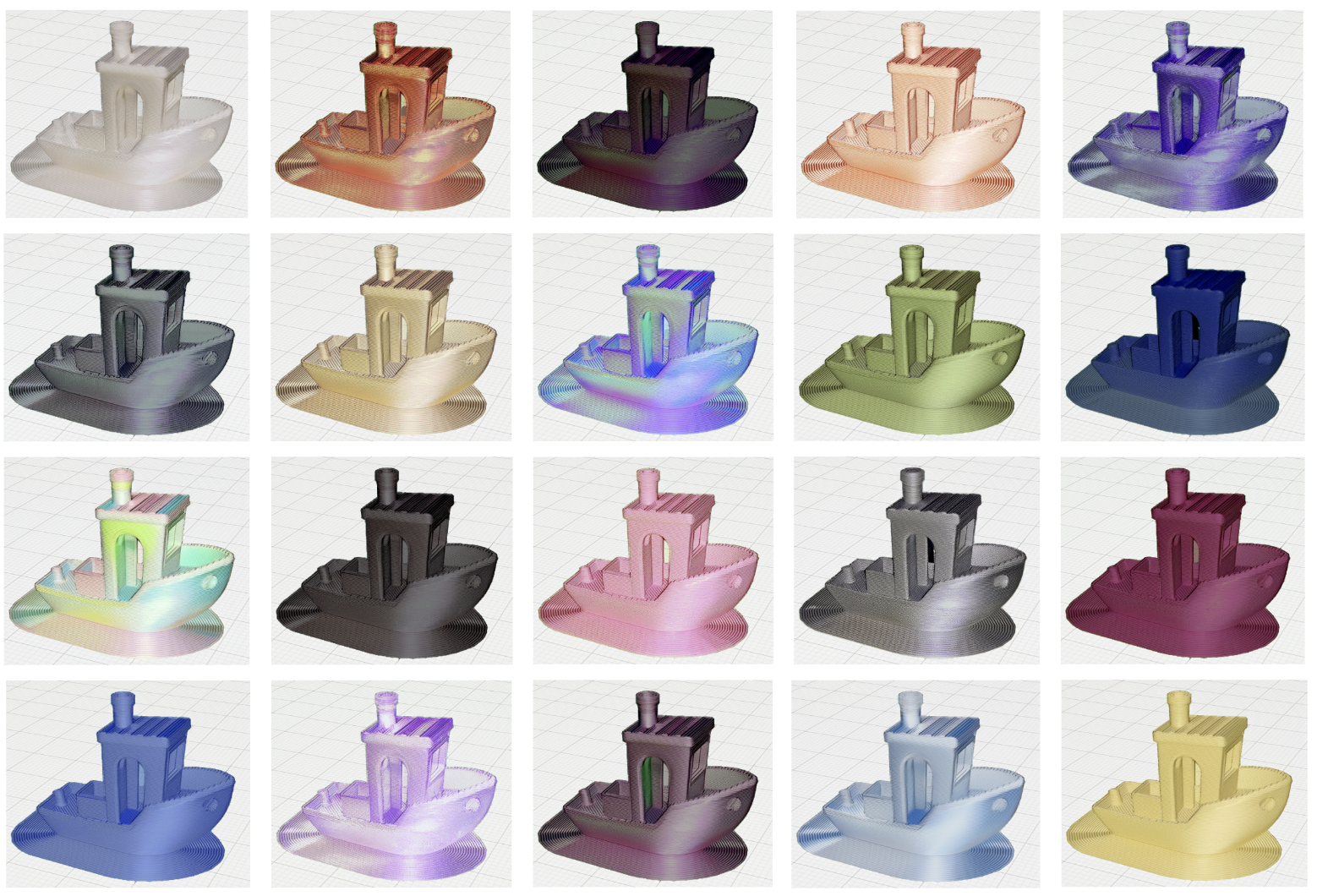
VisiPrint: Previewing 3D-Print Appearance from Real Material Samples
In Proceedings of CHI '26.
PDF Project Page
PDF Project Page
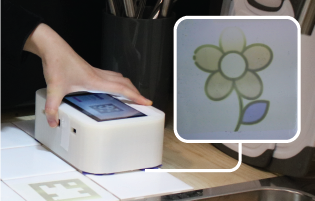
Objects with Interactive Appearances
We investigate what interactions become possible when physical objects are able to change their appearance. We develop computational fabrication techniques that create appearance-changing objects using photochromic dyes that can create multi-color textures that are reprogrammable on-demand; high-resolution multi-color 3D printing to fabricate lenticular lenses across an object’s surface to enable viewpoint-based appearance changes; birefringent materials that creates rotation-based appearance changes via polarized light mosaics; and optical illusions to create animated physical photographs.
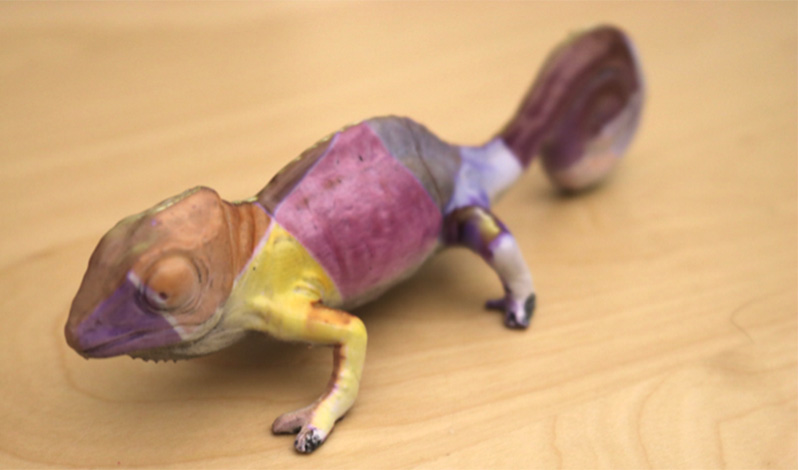 Photo-Chromeleon (ACM UIST 2019, Best Paper Award) |
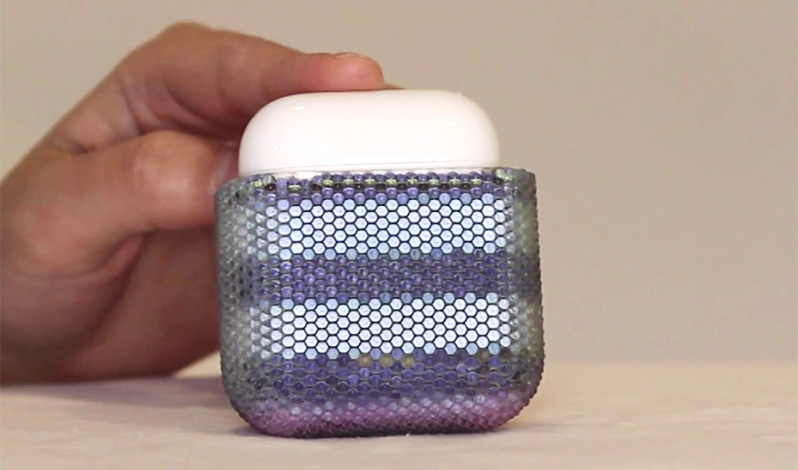 Lenticular Objects (ACM UIST 2021) |
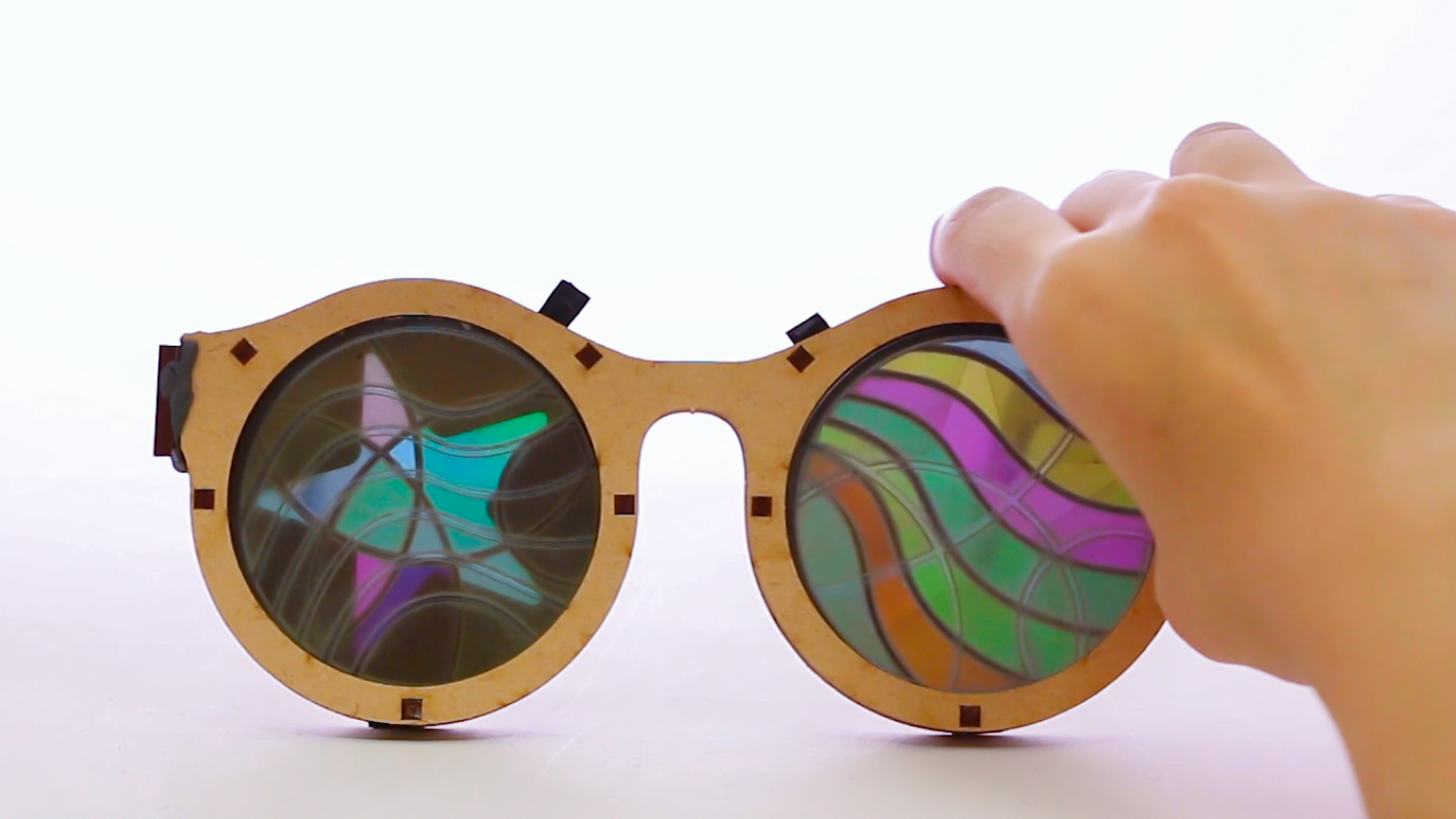 Polagons (ACM CHI 2023) |
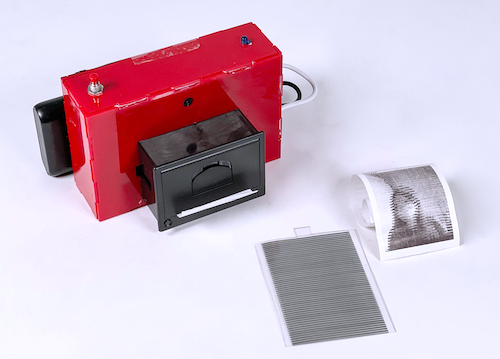 KineCam (ACM SIGGRAPH 2022 Art Paper) |
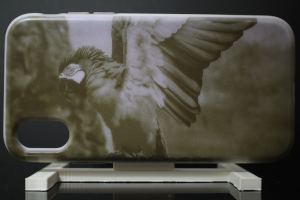 ChromoUpdate (ACM CHI 2021) |
 PortaChrome (ACM UIST 2024) |
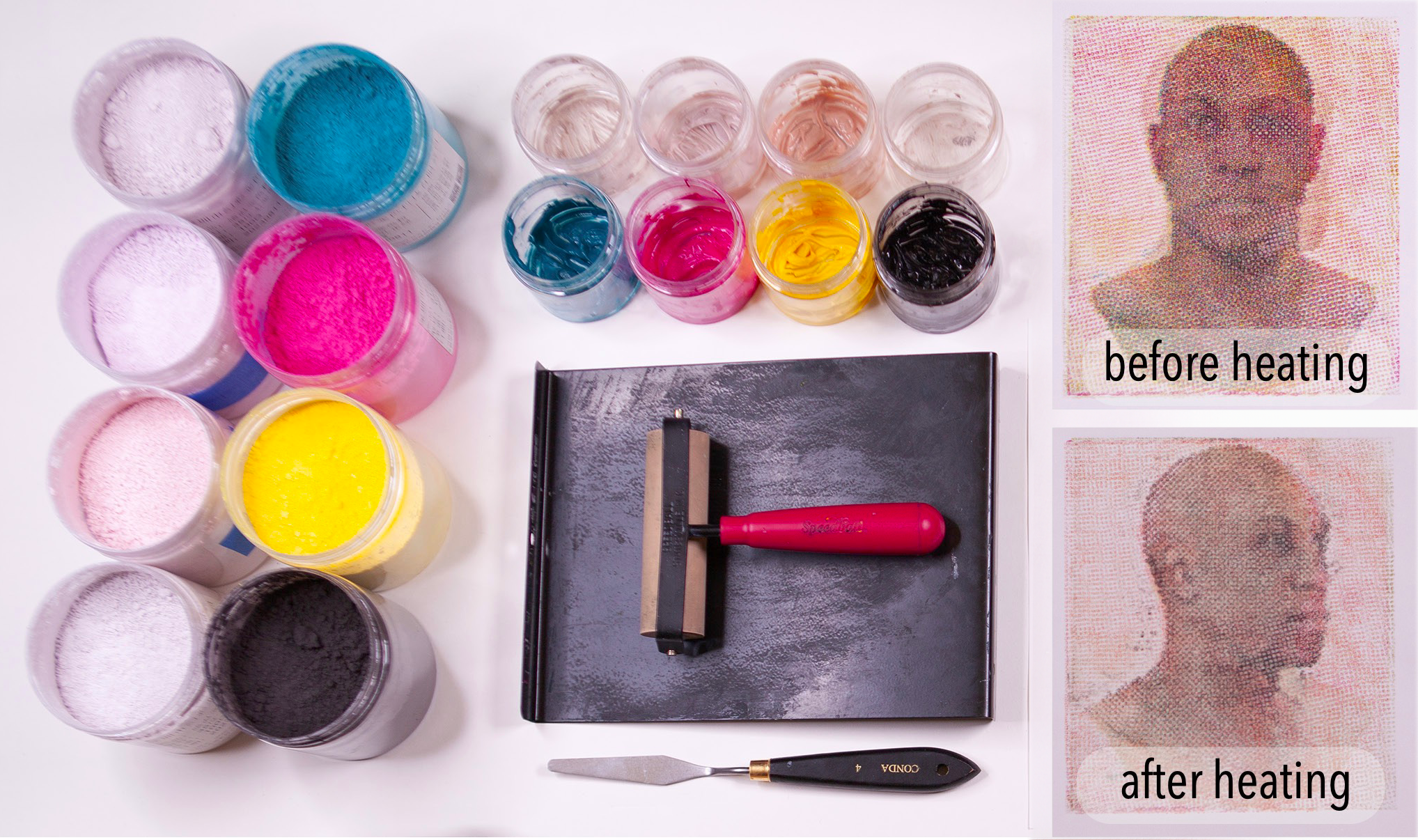 Thermochromorph (ACM SIGGRAPH Asia 2024 Art Paper) |
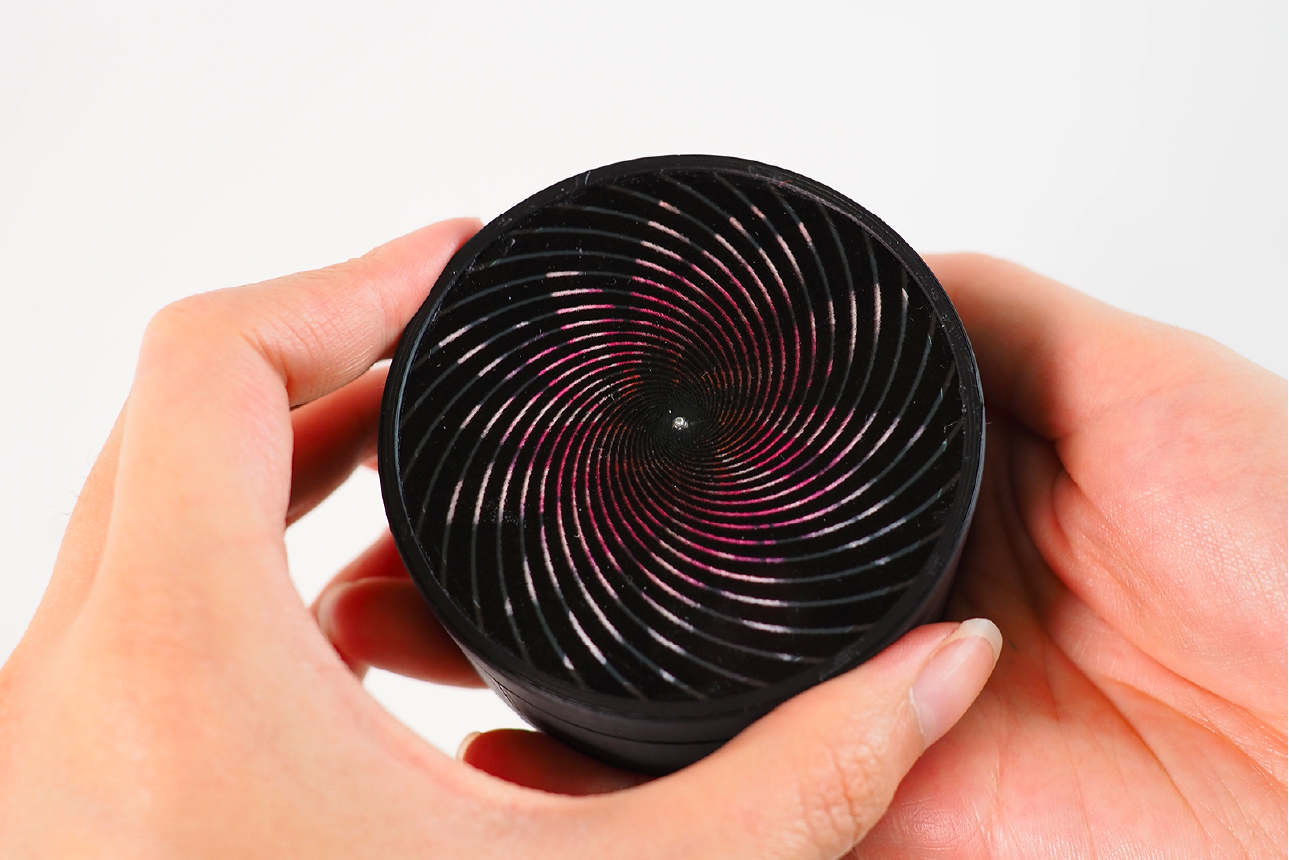 FabObscura (ACM UIST 2025) |
Augmenting Generative AI to Create Physically Functional Objects
Current Generative AI methods allow users to generate or manipulate 3D models based on text prompts provided by the user. While these methods produce visually compelling 3D models, the models are not physically functional post-fabrication, for instance, they might be fragile and break. In our lab, we are augmenting Generative AI models with the ability to also consider physical properties when generating 3D models, such as making sure models are structurally sound.
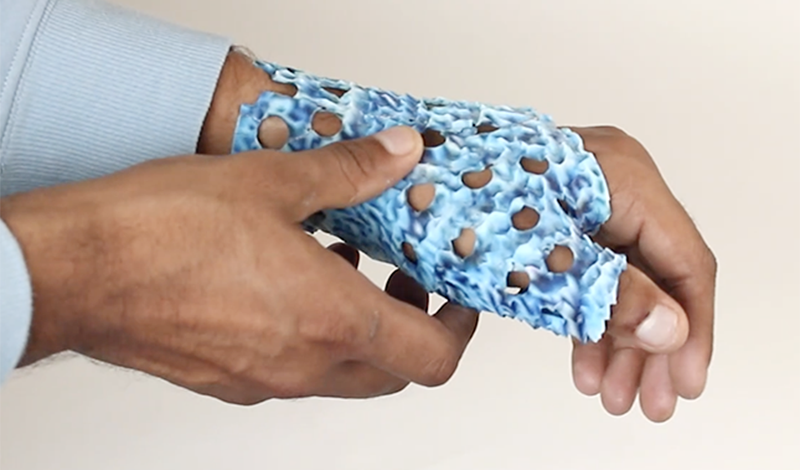 Style2Fab (ACM UIST 2023) |
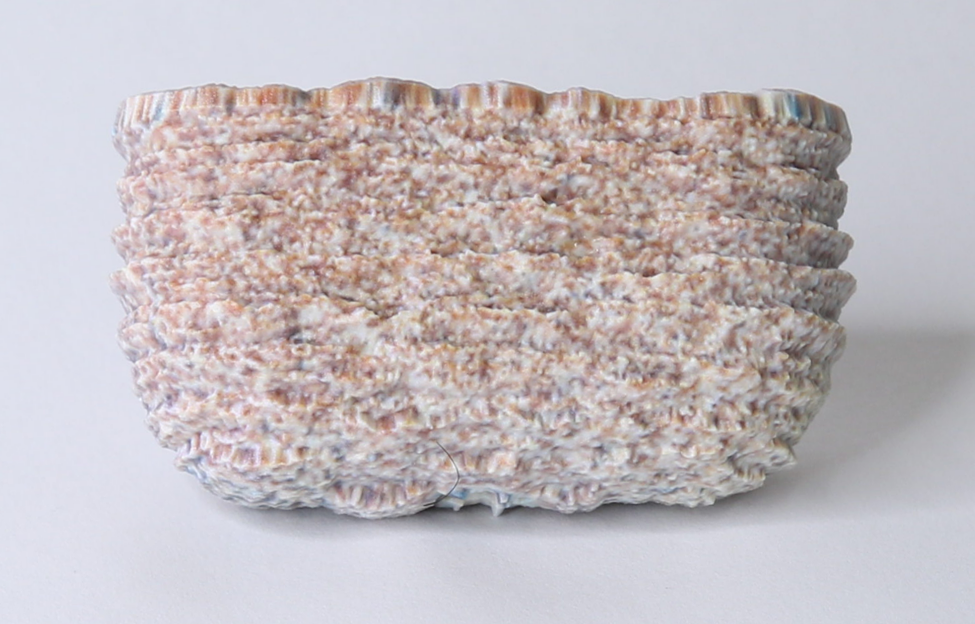 TactStyle (ACM CHI 2025) |
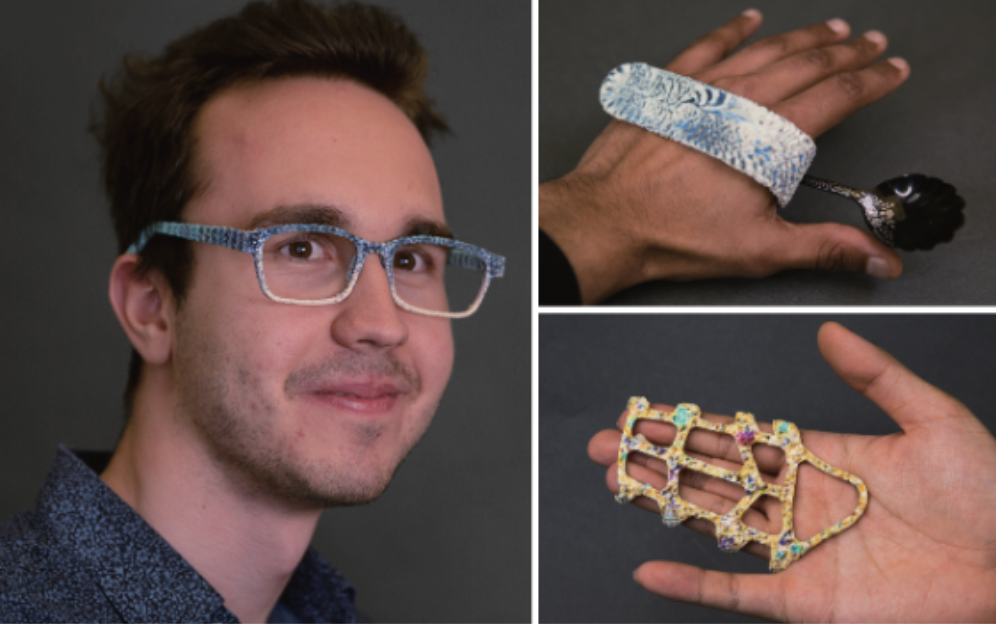 MechStyle (ACM SCF 2025) |
Fabricating Actuators
Designing and fabricating actuators with integrating sensing, such as required to manufacture robots in a single pass, is still challenging. We address this by developing new 3D printable actuators with integrated sensing.
 XStrings (ACM CHI 2025) |
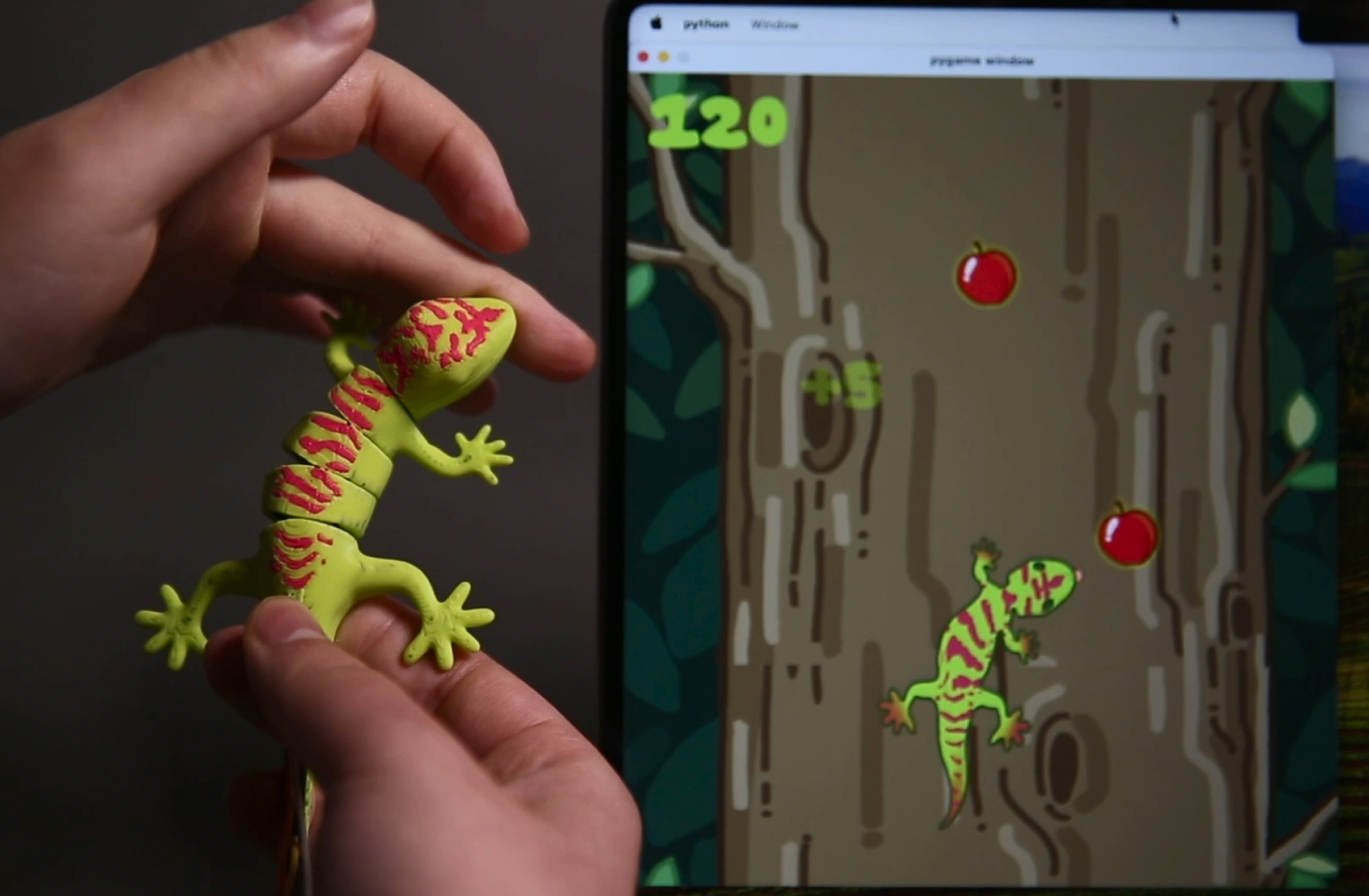 XSpine (ACM CHI 2026) |
Embedding Sensing into Objects
Capturing interactions where they occur on an object can be challenging for curved, deformable, and moving object geometries. We develop fabrication techniques that integrate sensing with moving parts such as mechanisms where sensors and wires can interfere with the object function, deformable objects where sensors are difficult to adhere, and large-scale objects where current sensors are not able to capture the interaction wholistically.
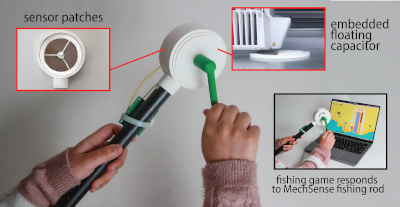 MechSense (ACM CHI 2023) |
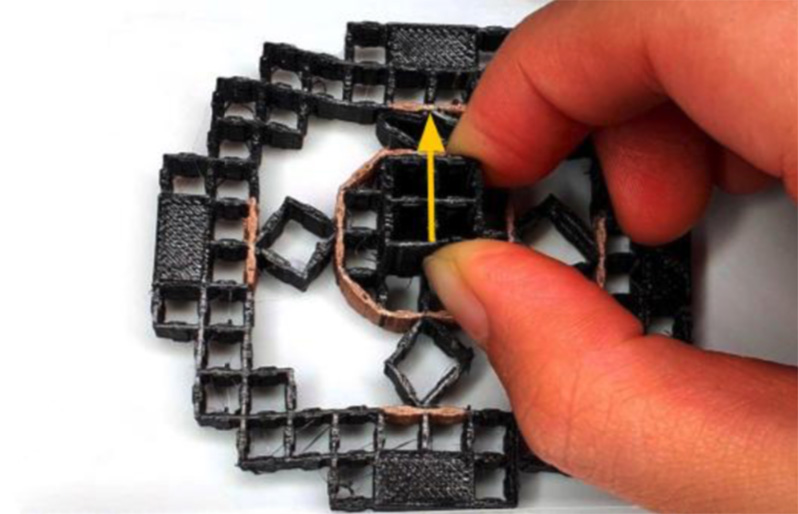 MetaSense (ACM UIST 2021) |
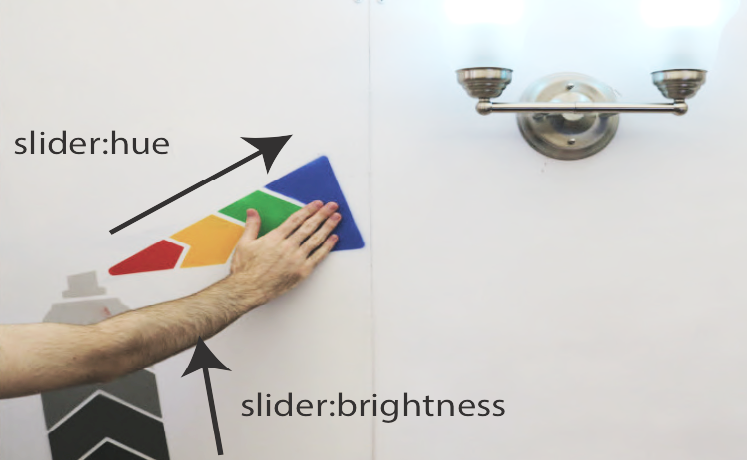 Sprayable User Interfaces (ACM CHI 2020) |
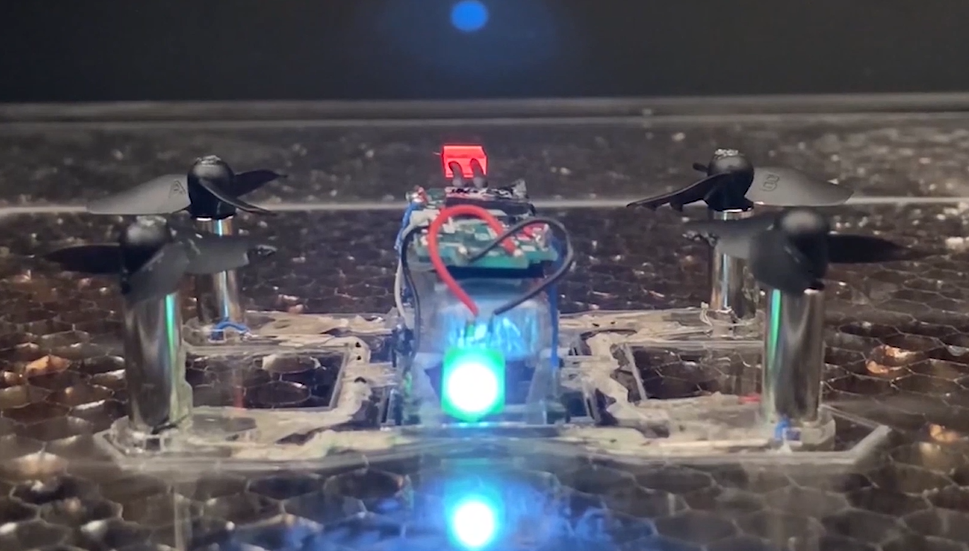 LaserFactory (ACM CHI 2021) |
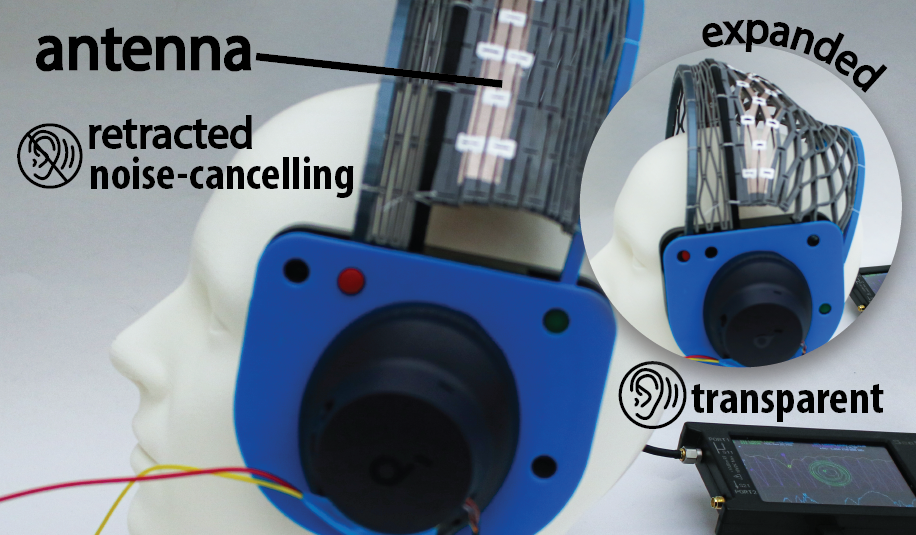 Meta-antenna (ACM UIST 2025) |
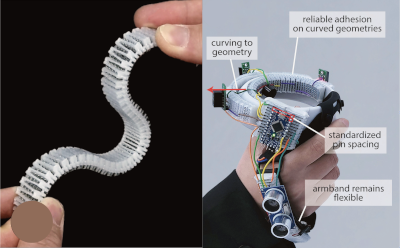 FlexBoard (ACM CHI 2023) |
Tracking Interactions via Markers
To keep objects passive while still being able to track interactions with them, we explore fabrication techniques that create invisible markers from infrared-translucent filament that can be tracked with IR cameras, create identifiable surface features based on artifacts of slicing and 3D printing that can be tracked with regular cameras, leverage existing surface features of materials via speckle imaging with a lens-less image sensor, or use magnetic pixels that can be read using hall effect sensors and viewed under magnetic viewing film.
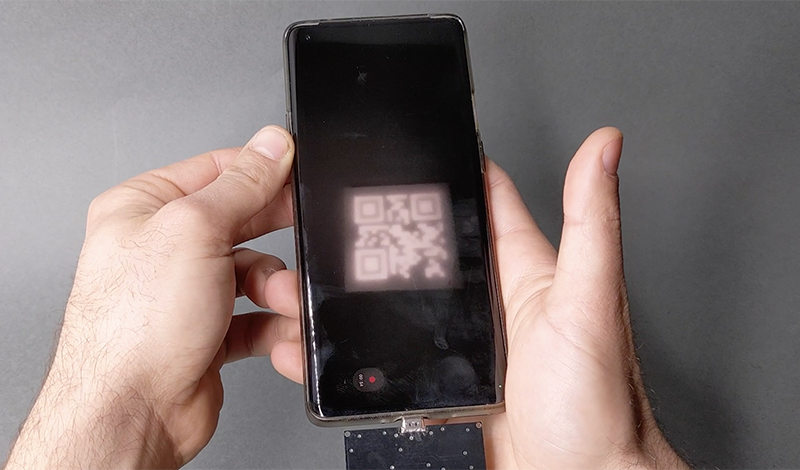 BrightMarker (ACM UIST 2023) |
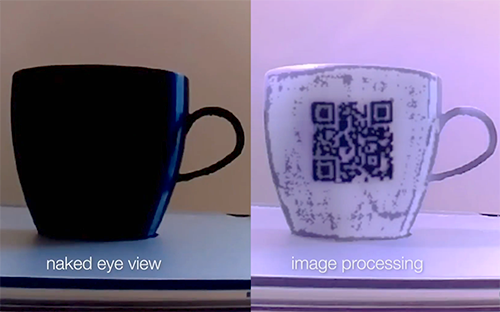 InfraredTags (ACM CHI 2022) |
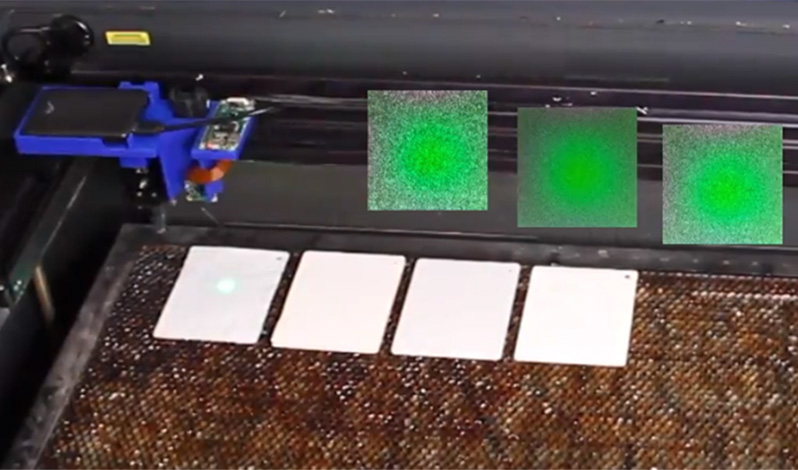 SensiCut (ACM UIST 2021) |
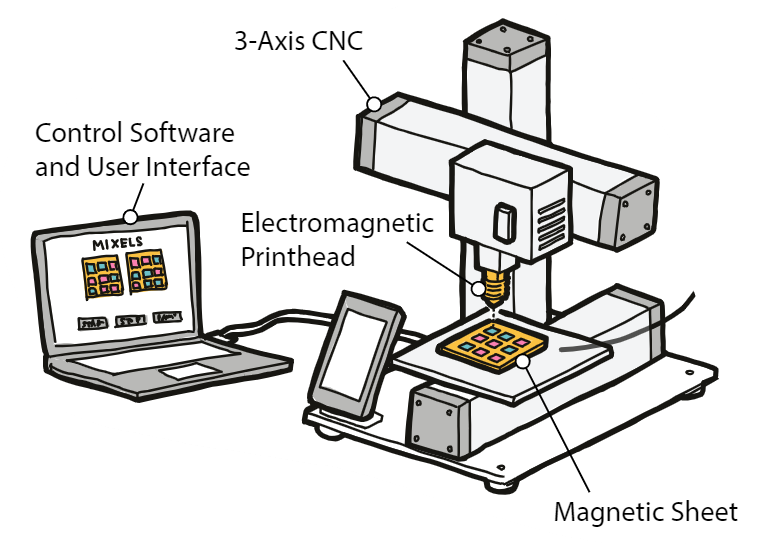 Mixels (ACM UIST 2022) |
Publications
A full list of publications at ACM CHI and ACM UIST can be found on my lab website:Full Publication List
Awards
- Best Paper Honorable Mention Award, ACM CHI 2025
- Best Demo Honorable Mention Award, ACM UIST 2024
- MIT Technology Review 'Innovators Under 35' 2022
- Microsoft Research Faculty Fellowship 2020
- Alfred P. Sloan Research Fellowship 2020
- Best Paper Award, ACM UIST 2019
- NSF CAREER Award 2019
- MIT EECS Outstanding Educator 2018
- ACM Doctoral Dissertation Award Honorable Mention 2018
- ACM SIGCHI Best Dissertation Award 2018
- GI Dissertation Award 2018
- Forbes 30 under 30 in Science, 2017
- Best Paper Nominee, ACM CHI 2015
- Best Paper Nominee, ACM CHI 2014
- Best Paper Award, ACM CHI 2013
Professional Service
General Chair, Paper Chair, Sub-Committee Chair: Paper Co-Chair ACM CHI 2023 Paper Co-Chair ACM UIST 2020 Subcommittee Co-Chair ACM CHI 2020 Subcommittee Co-Chair ACM CHI 2019 General Co-Chair ACM SCF 2017 Steering Committee Chair ACM SCF (2023-2025) Steering Committee Member ACM UIST (2019-ongoing) Program Committees: Program Committee Member ACM UIST 2026 Program Committee Member ACM CHI 2022 Program Committee Member ACM SIGGRAPH 2019 Program Committee Member ACM CHI 2018 Program Committee Member ACM CHI 2017 Program Committee Member ACM UIST 2017 Program Committee Member ACM CHI 2016 Program Committee Member ACM UIST 2016 Program Committee Member ACM CHI 2015 Organizing Committees: ACM UIST Visions Co-Chair 2026 ACM UIST Lasting Impact Co-Chair 2025 ACM UIST Demo Co-Chair 2019 ACM UIST Demo Co-Chair 2018 ACM UIST Doctoral Symposium Panelist 2017 ACM UIST Poster Co-Chair 2017 ACM UIST Poster Co-Chair 2016 ACM UIST Student Innovation Contest Co-Chair 2015 ACM UIST Student Volunteer Co-Chair 2014MIT News Articles
- A new way to “paint with light” to create radiant, color-changing items (2026)
- It took 40 years for technology to catch up to this zipper design (2026)
- Preview tool helps makers visualize 3D-printed objects (2026)
- Stamping high-res imagery onto everyday items to “reprogram” their appearance (2026)
- Generative AI tool helps 3D print personal items that sustain daily use (2026)
- Images that transform through heat (2025)
- 3D modeling you can feel (2025)
- 3D printing approach strings together dynamic objects for you (2025)
- A shape-changing antenna for more versatile sensing and communication (2025)
- A greener way to 3D print stronger stuff (2025)
- MIT software tool turns everyday objects into animated, eye-catching displays (2025)
- MNew 3D printing technique creates unique objects quickly and with less waste (2024)
- A portable light system that can digitize everyday objects (2024)
- 3D-printed revolving devices can sense how they are moving (2023)
- Toward more flexible and rapid prototyping of electronic devices (2023)
- A design tool to democratize the art of color-changing mosaics (2023)
- Invisible tagging system enhances 3D object tracking (2023)
- AI-driven tool makes it easy to personalize 3D-printable models (2023)
- A new way to integrate data with physical objects (2023)
- A new way to integrate data with physical objects (2023)
- Invisible machine-readable labels that identify and track objects (2022)
- Robotic cubes shapeshift in outer space (2022)
- MIT researchers create KineCAM, an instant camera that yields images that appear to move (2022)
- 3 Questions: Teaching computational maker skills through gaming (2022)
- MIT system “sees” the inner structure of the body during physical rehab (2022)
- Fabricating fully functional drones (2021)
- Smart laser cutter system detects different materials (2021)
- Engineers create 3D-printed objects that sense how a user is interacting with them (2021)
- With a zap of light, system switches objects’ colors and patterns (2021)
- Making machines that make robots, and robots that make themselves (2021)
- Design’s new frontier (2021)
- Less-wasteful laser-cutting (2021)
- Electronic design tool morphs interactive objects (2020)
- Sprayable User Interfaces (2020)
- Integrating Electronics Onto Physical Prototypes (2020)
- Objects can now change colors like a chameleon (2019)
- Creating 3-D-printed “motion sculptures” from 2-D videos (2018)
- Changing the color of 3-D printed objects (2018)
Invited Talks
- 2022: Accenture Global Labs
- 2021: University of Calgary, University College London
- 2020: Bandung Institute of Technology
- 2019: LMU Munich, Google Research
- 2017: Northwestern University, Stanford, Hewlett Packard
- 2016: Max Planck Institute, Technion, Cornell Tech, Cornell, Columbia, Princeton, CMU, U Michigan Ann Arbor, Brown, UIUC, University of Toronto, Harvard, UCSD, University of British Columbia, University of Washington, MIT EECS, MIT MechE, Yale, Stanford, UC Berkeley, Adobe Research
- 2015: Royal College of Art, UCSD, FXPAL, MIT CSAIL, MIT Media Lab, Cornell Tech, CMU, Newcastle University, University of Bristol, IST Austria, The Hebrew University, Adobe Research San Francisco
- 2014: Rakuten Institute, University of Tokyo, EPFL, Disney Research / ETH, University of Washington, MSR Redmond
- 2013: Media Interaction Lab, MSR Cambridge
Mentoring
Postdocs: Over the last 10 years, I have been an advisor to 10 postdocs. They are now faculty members at Aarhus University in Denmark, Osaka University and Keio University in Japan, Chung-An University in South Korea, and Chinese University of Hong Kong, and several of my former postdocs now work in industry research labs, such as Adobe and Google Research.


PhD Students: I'm currently advising 7 PhD students from Electrical Engineering and Computer Science, Mechanical Engineering, and Media Arts and Sciences. I graduated 4 PhD students who are now faculty members at University of Washington, University of Michigan, New York University, and one is a research scientist at Adobe. My students have received many honors, including fellowships from Adobe, Meta, and Siebel Fellowships as well as several teaching, mentoring and public service awards.





Master Thesis Research: Over the last 10 years, my lab has advised more than 35 master thesis. Seven master students received MIT EECS Awards for the Best Master Thesis in Computer Science (CS), Electrical Engineering (EE), and Artificial Intelligence and Decision Making (AID).


















Undergraduate Research: I'm a strong advocate for undergraduate research both to educate undergraduates on how to conduct great research and to train my PhD students in how to mentor students and manage a research lab. Over the last 10 years, my lab has mentored more than 100 undergraduate researchers with many students staying on for two or more semesters and subsequently writing their master thesis in the lab. The undergraduates in my lab have been extraordinarily successful receiving 14 MIT EECS Best Undergraduate Researcher Awards. Five of my PhD students Junyi Zhu, Martin Nisser, Faraz Faruqi, Yunyi Zhu, and Demircan Tas received MIT Ben Geld and Thomas Stockham Jr. Fellowships for extraordinary teaching and mentoring. Undergraduates in my lab have co-authored more than 30 publications at the top conferences in Human-Computer Interaction. Many undergraduates have attended research conferences and either given a live demonstration or part of the conference talk.































Postdoc / PhD Fellowships
- MIT Ben Gold Fellowship 2026 (Demircan Tas)
- Amazon Research Fellowship (Maxine Perroni-Scharf)
- MIT Felicis Scholarship 2026 (Faraz Faruqi)
- MIT Ben Gold Fellowship 2025 (Faraz Faruqi)
- MIT SoE MathWorks Fellowship (Maxine Perroni-Scharf)
- MIT Ben Gold Fellowship 2024 (Yunyi Zhu)
- NSF Graduate Research Fellowship (GRFP) 2023 (Paris Myers)
- MIT CSAIL METEOR fellowship 2022 (Mackenzie Leake)
- Siebel Fellowship 2022 (Junyi Zhu)
- MIT Ben Gold Fellowship 2022 (Martin Nisser)
- Meta Fellowship 2022 (Dishita Turakhia)
- MIT Thomas Stockham Jr. Fellowship 2021 (Junyi Zhu)
- Adobe Research Fellowship 2021 (Mustafa Doga Dogan)
- MIT Frederick C. Hennie III Teaching Award 2021 (Junyi Zhu)
- MIT Teaching Award from The Educational Justice Institute 2021 (Martin Nisser)
- MIT Priscilla King Gray for Public Service 2022 (Martin Nisser)
- MIT Seth J. Teller Award for Excellence, Inclusion and Diversity 2022 (Martin Nisser)
- MIT Collier Medal 2023 (Martin Nisser)
- MIT EECS David Adler MEng Thesis Award for Electrical Engineering (2nd place) 2025 (Cole J. Paulin)
- MIT EECS 2025 Johnson Best MEng AID Thesis Award 2025 (Ruowang Zhang)
- MIT EECS David Adler Best MEng EE Thesis Award 2024 (Gila Schein)
- MIT EECS 2023 Guillemin Best Master Thesis Award in Artificial Intelligence and Decision Making 2023 (Olivia Seow)
- MIT EECS Charles & Jennifer Johnson Best Computer Science Master Thesis Award 2023 (Veerapatr Yotamornsunthorn)
- MIT EECS Charles & Jennifer Johnson Best Computer Science Master Thesis Award 2021 (Christina Liao)
- MIT EECS Charles and Jennifer Johnson Best Computer Science Master Thesis Award 2019 (Kenneth Friedman)
- MIT Schwarzman College of Computing Best UROP Award 2026 (Dingning Cao)
- MIT MechE Carl G. Sontheimer Prize Best UROP Award 2026 (Regina Zheng)
- MIT EECS Jeremy Gerstle Best UROP Award 2025 (Alex Luchianov)
- MIT EECS Jeremy Gerstle Best UROP Award 2025 (Andy Li)
- MIT EECS Morais (1986) and Rosenblum (1986) Best UROP Award 2024 (Patrick William Haertel)
- MIT EECS Jeremy Gerstle Best Undergraduate Researcher Award 2023 (Raiphy Jerez)
- MIT EECS Anna Pogosyants Best Undergraduate Researcher Award 2023 (Ahmed Katary)
- MIT EECS Morais (1986) and Rosenblum (1986) Best Undergraduate Researcher Award 2022 (Ahmad Taka)
- MIT EECS Morais (1986) and Rosenblum (1986) Best Undergraduate Researcher Award 2021 (Steven Acevedo Colon)
- MIT EECS Licklider Best Undergraduate Researcher Award 2021 (Yunyi Zhu)
- MIT EECS SuperUROP Outstanding Research Award 2020 (Yunyi Zhu)
- MIT EECS Licklider Best Undergraduate Researcher Award 2020 (Carlos M. Castillo Lozada)
- MIT EECS Morais (1986) and Rosenblum (1986) Best Undergraduate Researcher Award 2019 (Aradhana Adhikari)
- MIT EECS Licklider Best Undergraduate Researcher Award 2018 (Xin Wen)